

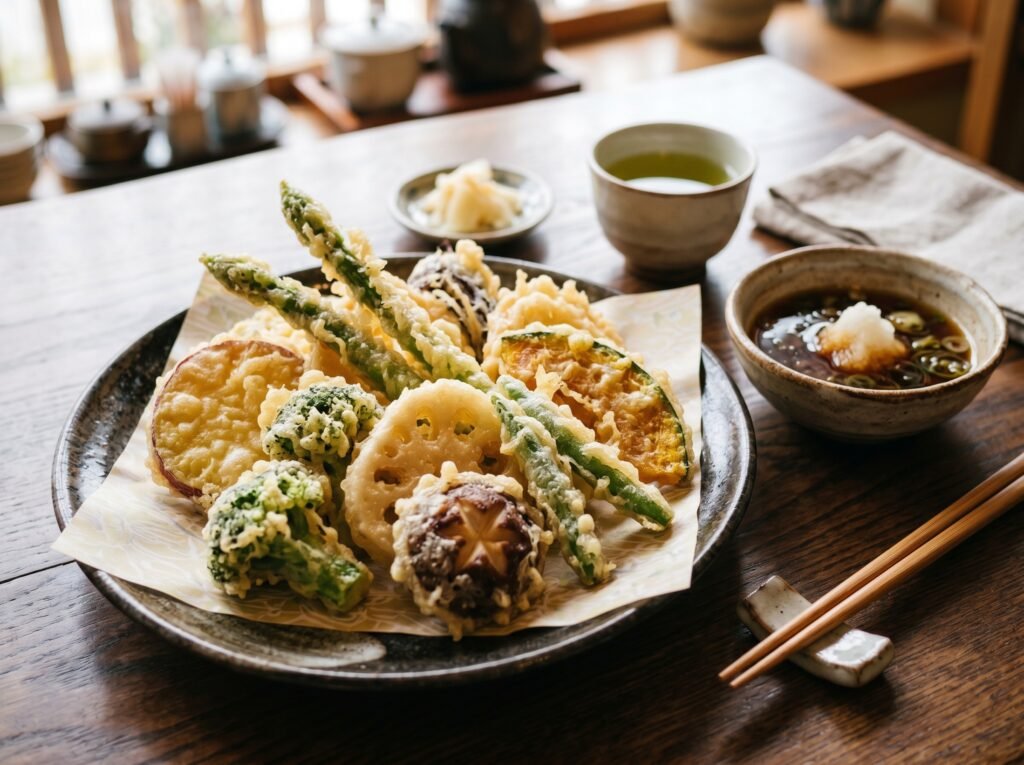
When looking for the pinnacle of fried appetizers, a platter of authentic Japanese Vegetable Tempura stands completely unrivaled. Far from a heavy, grease-laden commercial fritter coated in thick batter, true tempura is an art form of culinary minimalism and thermal physics. It features thin slices of vibrant vegetables encased in a pale, gossamer, shatteringly crisp lace shell that is so light it feels practically weightless. Sinking your teeth into a perfectly fried piece reveals a tender, steam-cooked vegetable center that retains its pristine color, sweetness, and bite. If your homemade tempura consistently turns out doughy, oily, soft, or drops its coating entirely in the fryer, it all comes down to gluten minimization, ice-cold thermodynamics, and rapid moisture vaporization.
The culinary science secret behind a lace-like, crisp coating that absorbs almost zero grease is the Ice-Cold Gluten Inhibition and Carbonation Expansion Strategy. Traditional batters rely on gluten networks to trap structure, but gluten absorbs oil and turns leathery when fried. For tempura, you want to stop gluten from forming entirely. By utilizing ice-cold carbonated water and a low-protein pastry flour, you shock the wheat starches, preventing the proteins from binding together. Mixing the batter with chopsticks for mere seconds—leaving it incredibly lumpy with visible pockets of dry flour—guarantees a fragile structure. When these ice-cold, carbonated lumps hit screaming-hot $180^\circ\text{C}$ ($350^\circ\text{F}$) oil, the trapped carbon dioxide gas and water vapor instantly flash-boil and explode outward through the batter. This creates thousands of microscopic, hollow craters that form a delicate lace matrix, flash-frying the vegetable in a fraction of a second without letting oil seep inward.
Why You’ll Love This Crispy Classic
- A Weightless, Crackling Shell: The combination of ice-cold carbonation and minimum mixing prevents gluten formation, delivering a pure, crisp crunch.
- Perfectly Steamed Inside: The explosive heat transfers through the batter to instantly steam-cook the vegetables in their own natural juices.
- Clean and Totally Non-Greasy: Because the steam escapes so violently, it creates a high-pressure outward flow that keeps the frying oil from saturating the food.
- The Ultimate Umami Dip: Paired with a traditional Tentsuyu dipping sauce made from sweet mirin and savory soy, every bite hits a perfect sweet-salty balance.
Key Ingredients Overview
- The Veggie Selection: Hard, low-moisture vegetables like sweet potato, kabocha squash, lotus root, bell peppers, and broccoli florets are the absolute elite choices. They hold their structural shape perfectly under intense heat.
- Low-Protein Cake or Pastry Flour: Contains far less gluten-forming protein than standard all-purpose flour, helping ensure a fragile, melt-in-your-mouth crust.
- Ice-Cold Sparkling Water: Must be freezing cold. The carbonation introduces millions of tiny air bubbles right into the mix, expanding the frying batter into a lacy texture.
- High-Smoke Point Frying Oil: Neutral oils like canola, corn, or peanut oil are essential. For an authentic Japanese restaurant aroma, a small splash of toasted sesame oil is often blended into the frying vat.
Step-by-Step Instructions
1.The Uniform Slice and Starch Dusting Coating:10 min.
Slice your hard vegetables (like sweet potatoes and squash) into thin, uniform 1/4-inch planks so they cook completely through at the same rate. Cut broccoli into flat florets. Thoroughly pat every single vegetable piece completely dry with paper towels, then dust them lightly in a thin veil of plain flour. This dry flour dusting acts as a structural primer, giving the wet batter a rough surface to cling to so it doesn’t slip off in the oil.
2.The High-Thermal Frying Oil Graduation:3 min.
Pour at least 2 to 3 inches of neutral frying oil into a deep, heavy-bottomed pot or Dutch oven. Heat the oil over medium-high heat until it reaches exactly 180°C (350°F) on a kitchen thermometer. Keeping the oil at this exact thermal sweet spot ensures the batter explodes instantly without burning or absorbing excess oil.
3.The Ice-Cold Lumpy Carbonation Whisk:2 min.
In a bowl sitting inside a larger bowl filled with ice, combine your cake flour, cornstarch, and baking powder. Pour in your freezing-cold sparkling water. Using chopsticks, stab and stir the liquid for a maximum of 10 to 15 seconds. Stop mixing immediately when a loose, highly watery, and incredibly lumpy batter forms. Visible dry flour pockets and lumps are a sign of a perfect tempura batter.
4.The Rapid Dip and Oil Entry Drag:1 min.
Working in small batches to avoid crowding the pot, take a flour-dusted vegetable piece, dip it quickly into the ice-cold batter, and drop it immediately into the hot oil. Give the vegetable a gentle swirl as it enters the oil to help the lacy batter wings expand outwards.
5.The Pale Golden Flash-Fry Rotation:3 min.
Fry the vegetables for 2 to 3 minutes, flipping them gently once halfway through with tongs or a slotted spoon. Unlike Western frying, tempura should not turn a deep, dark brown; it should remain a beautiful, pale, straw-gold color. The bubbles around the vegetable will slow down dramatically once the internal moisture has fully steamed off.
6.The Elevated Wire Rack De-Greasing Rest:1 min.
Lift the crisp tempura out of the oil and hold it over the pot for 5 seconds to let excess fat drip free. Transfer the pieces immediately onto a wire cooling rack or a paper towel-lined tray. Never stack the fried pieces on top of one another; stacking traps steam between the layers, immediately softening that ultra-fragile lacy shell.
7.The Savory Tentsuyu Dipping Fusion:2 min.
While the tempura cools for a brief minute, quickly warm your vegetable broth, soy sauce, and mirin in a small saucepan until unified. Pour into individual dipping bowls and stir in a spoonful of grated daikon radish or ginger if desired. Serve the hot, crackling tempura immediately.
Expert Tips for Success
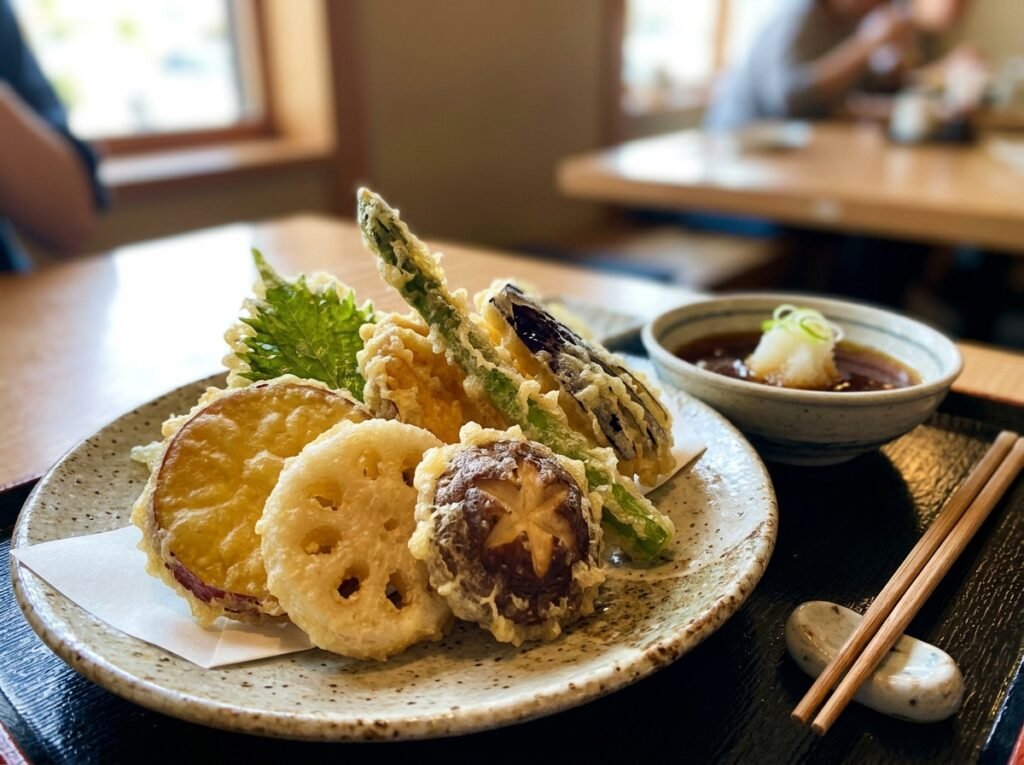
- The Lumpy Batter Law: Never try to whisk your tempura batter into a smooth, elegant cream. Over-mixing activates wheat gluten proteins, creating an elastic, stretchy dough that traps steam and turns rubbery, thick, and greasy when fried. Stirring with chopsticks for just a few seconds leaves clumps that are vital for creating those crispy, flaky “wings” of tempura.
- The Ice-Bath Rule: Always keep your mixing bowl resting inside a larger bowl filled with ice water throughout the cooking process. Keeping the batter ice-cold creates a massive temperature differential when it hits the hot oil, causing the water to flash-evaporate with violent speed, which is exactly what creates that characteristic shatteringly crisp crunch.
- Fry in Small, Disciplined Batches: Resist the urge to dump all your vegetables into the oil at once. Crowding the pot instantly drops the frying oil’s temperature by dozens of degrees. When the oil cools down, the batter absorbs the fat slowly instead of flash-frying, leaving you with a soggy, heavy, oil-logged coating. Fry just 4 to 5 pieces at a time.
The Recipe Card
- Prep Time: 15 mins
- Cook Time: 15 mins
- Total Time: 30 mins
- Yield: One Large Platter (3 to 4 Shared Appetizer Servings)
Ingredients:
- The Vegetable Palette: 1 Small Sweet Potato (sliced into ¼-inch rounds), 1 Small Zucchini (cut into sticks), 1 Small Red Bell Pepper (cut into strips), 6-8 Fresh Broccoli Florets, All-purpose flour (for dusting).
- The Gossamer Tempura Batter: 120g (1 cup) Cake Flour or Pastry Flour, 2 tbsp Cornstarch, ½ tsp Baking Powder, 240ml (1 cup) Freezing-Cold Sparkling Carbonated Water, A few ice cubes (for the cooling bath).
- The Classic Tentsuyu Dipping Sauce: 120ml (½ cup) Dashi or Rich Vegetable Broth, 2 tbsp Soy Sauce, 2 tbsp Mirin (Japanese sweet rice wine), ½ tsp Sugar.
Instructions:
For the Sauce: Combine the vegetable broth, soy sauce, mirin, and sugar in a small saucepan. Bring to a bare simmer for 1 minute until the sugar dissolves completely, then remove from heat and pour into dipping bowls.
For the Tempura: Heat 3 inches of neutral oil in a deep pot until it registers exactly 180°C (350°F). Pat all the sliced vegetables completely dry with paper towels, then toss them in a small bowl with a few tablespoons of flour until lightly dusted. Set up an ice bath by placing a large mixing bowl filled with ice and water down, then nestle a medium bowl inside it. In that cold medium bowl, mix the cake flour, cornstarch, and baking powder. Pour in the freezing-cold sparkling water and stir with chopsticks for only 10–15 seconds, leaving plenty of lumps and dry spots. Dip the dusted vegetables into the cold batter one by one and drop gently into the hot oil. Fry in batches of 4–5 pieces for 2–3 minutes until pale gold and crisp. Drain on a wire rack and serve immediately with the warm dipping sauce.
