


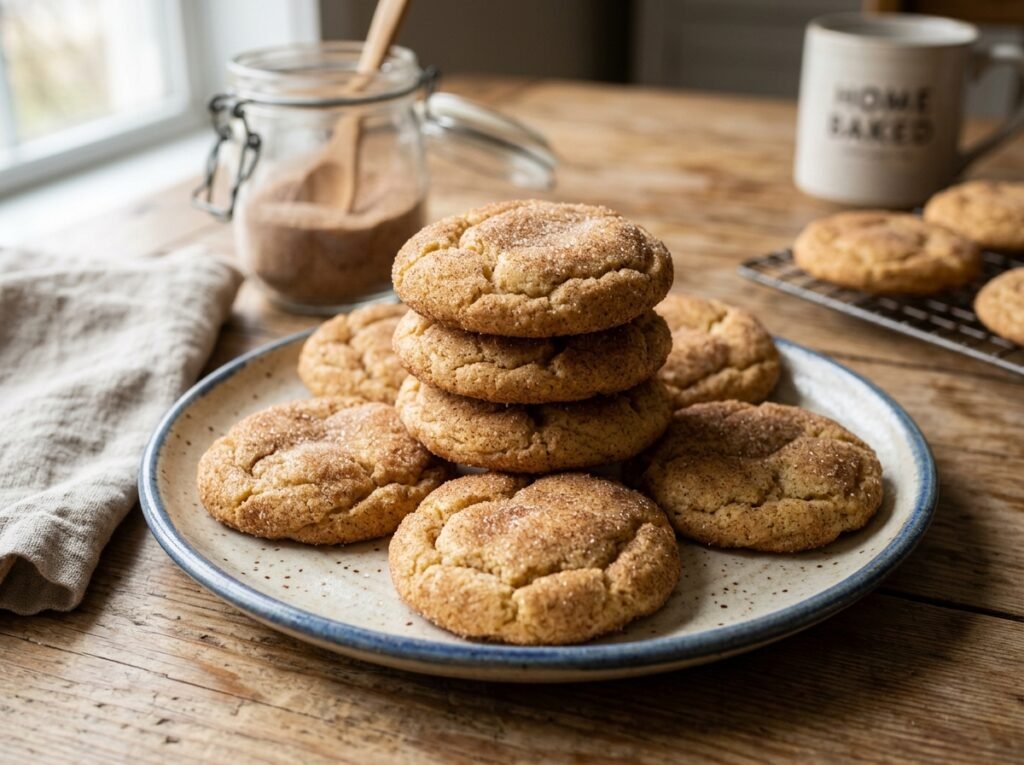
While it looks like a humble sugar cookie rolled in cinnamon spice, a true Snickerdoodle is an entirely unique bake. This beloved sweet treat features crisp, golden edges that give way to an incredibly soft, dense, pillow-chewy center. The signature hallmark of an authentic snickerdoodle is its beautifully crinkled, fractured surface and a subtle, distinctive tangy undertone that keeps the sweet sugar profile in check. If your homemade snickerdoodles end up baking into flat, crunchy discs, rising into dry, cake-like mounds, or losing that classic crinkle, it comes down to a specific chemical leavening reaction and lipid temperature control.
The secret to a perfect snickerdoodle texture and flavor is the Cream of Tartar Potassium Acid Activation Strategy. You cannot simply use baking powder in a snickerdoodle; you must use a combination of baking soda and cream of tartar (potassium bitartrate). Cream of tartar is a highly acidic byproduct of winemaking. When mixed into the dough, it does two critical things: it breaks down the sugar crystals to prevent a gritty, crisp snap (ensuring a dense, ultra-chewy center), and it provides a sharp, pleasant tang. As the cookies bake in a high-heat oven, the acid quickly reacts with the alkaline baking soda to release carbon dioxide gas. This causes the dough ball to puff up rapidly, fracturing the cinnamon-sugar outer crust before gently deflating into those iconic, deep canyon crinkles as it cools.
Why You’ll Love This Sweet Treat
- The Ultimate Pillow-Chew Texture: The high ratio of fat to flour combined with a short bake time yields an incredibly tender, melt-in-your-mouth crumb.
- Warm, Nostalgic Comfort Spice: Rolling the dough in a heavy coating of cinnamon sugar creates a crisp, sweet outer shell that smells like cozy bakery heaven.
- No-Chill Baking Simplicity: Unlike many gourmet cookie recipes that require hours of cold refrigeration, this dough goes from bowl to oven instantly.
- A Cozy Curation Aesthetic: The highly textured, cracked earth appearance of these cookies makes them look stunning when stacked high in jars or featured on aesthetic food boards.
Key Ingredients Overview
- Cream of Tartar: The absolute non-negotiable ingredient. Without it, you are simply making a cinnamon-coated sugar cookie. It provides the essential chewiness, the classic surface crinkles, and the signature tang.
- A Blend of Unsalted Butter and Shortening: Pure butter provides incredible flavor, but it melts quickly in the oven, which can cause cookies to spread flat. Substituting a portion of the butter with vegetable shortening (which has a higher melting point) ensures the cookies hold their shape, baking up thick and ultra-soft.
- Granulated White Sugar Only: Avoid brown sugar in this specific recipe. White sugar keeps the flavor clean, allows the tang of the cream of tartar to cut through, and creates the ideal crisp exterior crust when rolled with cinnamon.
- Premium Ground Saigon Cinnamon: This variety of cinnamon contains a higher essential oil content than standard cassia, delivering a much stronger, warmer, and sweeter aroma to the outer coating.
Step-by-Step Instructions
1.The Leavening Acid Dry Matrix Blend:3 min.
Preheat your oven to 200°C (400°F) and line two large baking sheets with parchment paper. In a medium bowl, whisk together your all-purpose flour, cream of tartar, baking soda, and fine sea salt until completely uniform.
2.The Dual-Lipid High-Speed Sugar Cream:5 min.
In a large bowl (or stand mixer fitted with the paddle attachment), combine your softened unsalted butter, vegetable shortening, and granulated white sugar. Beat on medium-high speed for a full 4 to 5 minutes until the mixture turns pale, light, and incredibly fluffy.
3.The Emulsified Egg and Vanilla Binding:2 min.
Add your room-temperature whole eggs one at a time to the creamed butter, beating thoroughly after each addition. Add the pure vanilla extract and beat for another 30 seconds until the liquid fats are fully emulsified into a smooth, thick cream.
4.The Short-Mix Low-Speed Dough Integration:2 min.
Turn your mixer down to the absolute lowest speed. Add the flour mixture all at once and mix just until the white streaks of flour disappear into a soft, cohesive dough. Do not over-mix, or you will develop gluten, turning your chewy cookies tough and bready.
5.The Saigon Cinnamon-Sugar Rolling Prep:2 min.
In a small, shallow wide bowl, vigorously stir together your remaining granulated white sugar and ground Saigon cinnamon until the spice is completely blended into a uniform, fragrant brown sugar dust.
6.The High-Density Sphere Rolling Ritual:5 min.
Using a cookie scoop, portion out portions of the soft dough (roughly 2 tablespoons or 35 grams each). Roll the dough firmly between your bare palms to shape them into perfectly smooth, tight spheres with no cracks.
7.The Double-Dipped Blanket Spice Roll:3 min.
Drop each dough sphere directly into the cinnamon-sugar bowl. Roll it around until it is entirely blanketed in a thick layer of spice. For an extra flavorful crust, roll it a second time. Arrange the coated spheres 2 inches apart on your prepared baking sheets. Do not flatten them!
8.The Precision High-Heat Fracture Bake:10 min.
Slide the sheets into the center rack of your preheated oven. Bake at 200°C (400°F) for exactly 8 to 10 minutes. Watch them closely: the cookies should puff up dramatically and develop deep cracks. Remove them the second the edges look golden and set, even if the center cracks still look slightly soft and wet.
9.The Flat-Canyon Cooling Compression Rest:5 min.
Let the cookies rest hot on the baking sheet for 5 minutes. As they sit, the trapped hot air will escape, causing the puffed center to gently cave in, locking in the dense, chewy texture. Transfer the cookies to a wire rack to cool completely.
Expert Tips for Success
- The High-Heat Oven Target: Snickerdoodles thrive on an uncharacteristically high baking temperature of 200°C (400°F). Baking them hot cooks the outer edges instantly while keeping the heat from fully reaching the core, ensuring the middle stays wonderfully underbaked and ultra-chewy rather than drying out.
- Never Skip the Shortening Blend: While a 100% butter cookie tastes amazing, pure butter cookies will spread far more rapidly, melting before the cream of tartar can puff the structure up. Using a 50/50 split of butter and shortening gives you the absolute best of both worlds: unbeatable rich flavor and a thick, pillowy, bakery-style height.
- The Freshness Test for Cream of Tartar: Because cream of tartar is the chemical engine of this cookie, it must be fresh. If your jar has been sitting open in your pantry for over a year, it may have lost its acidity. Test it by mixing a half-teaspoon of cream of tartar into a tablespoon of warm water, then add a pinch of baking soda. If it doesn’t fizz up intensely right away, replace it before baking.
The Recipe Card
- Prep Time: 20 mins
- Cook Time: 10 mins
- Total Time: 30 mins
- Yield: 24 Soft & Chewy Cookies
Ingredients:
- The Tangy Pillow-Chew Dough: 350g (approx. 2 ¾ cups) All-Purpose Flour, 2 tsp Cream of Tartar, 1 tsp Baking Soda, ¾ tsp Fine Sea Salt, 115g (½ cup) Unsalted Butter (softened to room temp), 100g (½ cup) Vegetable Shortening, 300g (1 ½ cups) Granulated White Sugar, 2 Large Eggs (room temperature), 2 tsp Pure Vanilla Extract.
- The Fragrant Coating: 30g (2 tbsp) Granulated White Sugar, 2 tsp Ground Saigon Cinnamon.
Instructions:
Preheat your oven to 200°C (400°F) and line two large baking sheets with parchment paper. In a medium bowl, whisk together the all-purpose flour, cream of tartar, baking soda, and salt; set aside. In a large bowl or stand mixer, beat the softened butter, vegetable shortening, and 1 ½ cups of white sugar on medium-high speed for 4-5 minutes until light, pale, and fluffy. Add the eggs one at a time, followed by the vanilla extract, beating well until fully incorporated. Turn the mixer to low, add the dry flour mixture all at once, and mix just until combined into a soft dough. In a small shallow bowl, stir together the 2 tablespoons of sugar and ground cinnamon. Scoop the dough into 1.5-inch balls, roll them between your palms until smooth, and roll through the cinnamon-sugar mixture until heavily coated. Place 2 inches apart on the baking sheets. Bake for 8 to 10 minutes until the edges are set but the cracked centers are still soft. Cool on the pan for 5 minutes before transferring to a wire rack.
