

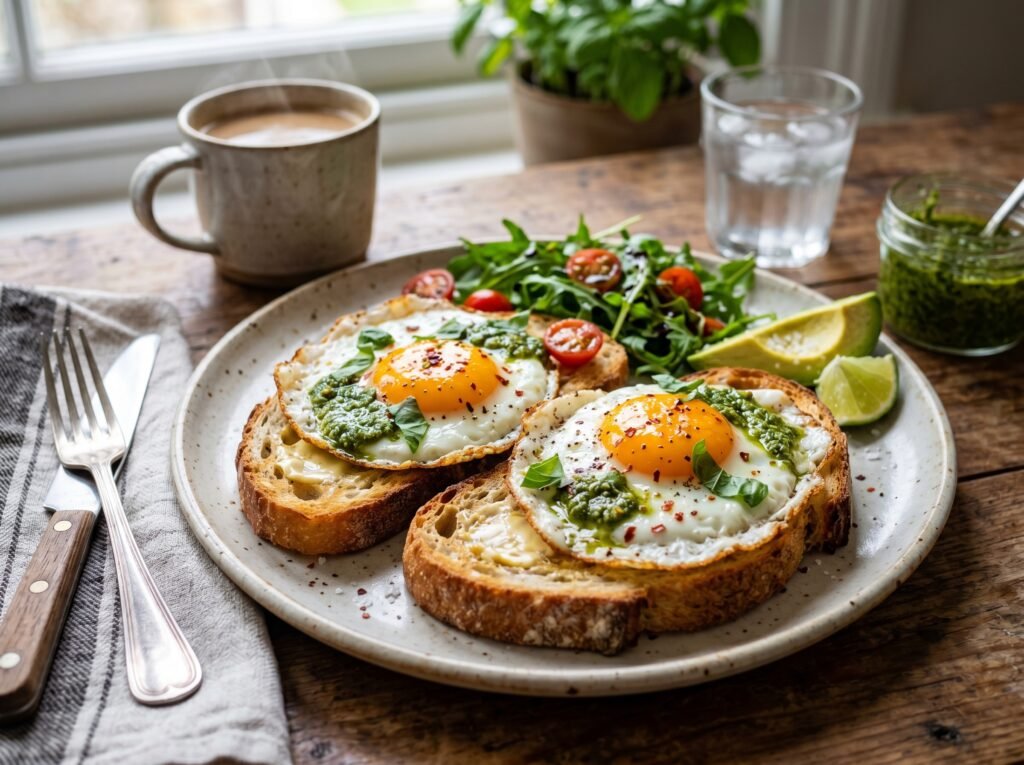
When you are craving a fast morning meal that packs an incredible depth of herbaceous, savory flavor, Pesto Fried Eggs with Toast (the internet-famous viral sensation) stands completely unrivaled. Far from a typical greasy fried egg slathered in cold condiments, this breakfast is a masterclass in utilizing oil separation as a high-heat cooking medium. It features tender eggs with lacy, crisped edges entirely infused with the essence of basil, garlic, and pine nuts, served over a slab of thick, toasted bread. If your homemade pesto eggs consistently turn out watery, look a dull grayish-brown, or the egg white refuses to set while the yolk overcooks, it all comes down to the thermal separation of oil emulsions and water vaporization mechanics.
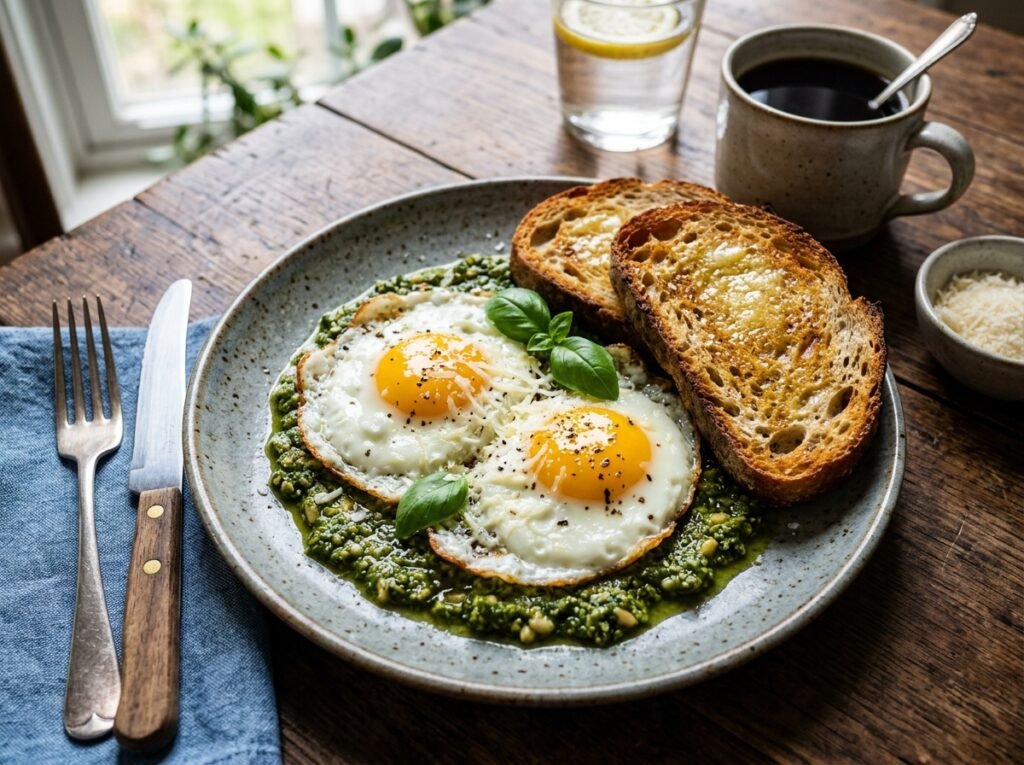
The culinary science secret behind a vibrant green, perfectly crusted pesto egg is the Emulsion-Separation Cooking Medium Strategy. Jarred or fresh basil pesto is a heavy emulsion of pulverized greens, hard cheeses, nuts, and high-quality extra virgin olive oil. Instead of melting like butter or staying unified like canola oil, spreading pesto into a warm skillet over medium heat causes the emulsion to intentionally break. The olive oil separates from the herbal solids, pooling on the pan surface. When you crack your eggs directly into this separated layer, the hot oil flash-fries the outer egg white proteins (ovalbumin) into crispy, golden-brown lace. Concurrently, the solid components—the basil particles, minced garlic, and grated parmesan—toast directly against the skillet wall, anchoring themselves cleanly to the egg whites to form a highly textured, aromatic crust.
Why You’ll Love This 10-Minute Upgrade
- Built-in Flavor Foundation: The pesto completely replaces traditional butter or frying oil, meaning your eggs are seasoned with garlic, cheese, and herbs from the inside out.
- Shatteringly Crispy Edges: The separated olive oil from the pesto gets hot enough to create an incredibly satisfying, lace-like crunch around the egg whites.
- Rich, Liquid-Gold Centers: Gentle heat management ensures your egg whites cook completely through while the yolks remain warm, velvety, and perfectly runny.
- Minimal Cleanup: A single skillet handles both the pesto frying and the bread toasting, making it a dream for quick weekday mornings.
Key Ingredients Overview
- High-Quality Basil Pesto: The cooking medium and flavor engine. A thick, vibrant green pesto with a visible layer of olive oil provides the best emulsion break for frying.
- Fresh Eggs: The protein canvas. Fresh eggs hold their shape better in the pan, ensuring the yolk stays perfectly centered amidst the bubbling pool of green herbs.
- Thick-Cut Sourdough or Artisanal Bread: The structural anchor. A sturdy, rustic slice with a dense crumb handles the rich, runny egg yolk and herbaceous oil without collapsing.
- Red Pepper Flakes and Goat Cheese (Optional): The finishing accents. Red pepper flakes add a bright kick of heat, while soft goat cheese crumbles mimic a creamy, tangy lipid balance on the toast.
Step-by-Step Instructions
1.The Moderate-Heat Emulsion Break:2 min.
Spoon 2 generous tablespoons of basil pesto directly into a cold non-stick skillet or seasoned cast-iron pan. Turn the burner to medium heat. As the pan warms up, you will see the bright green basil solids separate from the clear olive oil, creating a bubbling, fragrant frying patch.
2.The Dual-Pocket Protein Injection:1 min.
Once the separated oil begins to shimmer and bubble gently, use a wooden spoon to clear two small circles in the basil solids. Crack your fresh eggs carefully directly into these pockets. The whites should immediately hit the pooled hot oil and begin to hiss and turn opaque.
3.The Trapped-Steam White Solidification:4 min.
Turn the stove heat down to medium-low. To ensure the top layer of the egg white sets perfectly without overcooking the bright yellow yolk, cover the skillet tightly with a lid for 3 to 4 minutes. The trapped internal steam will gently poach the top of the egg while the bottom layer fries to a crisp crunch in the oil.
4.The High-Friction Crumb Toasting:2 min.
While the eggs are cooking, place your thick slices of sourdough bread into a toaster or onto a hot grill pan. Toast until the exterior develops a deep, golden-brown ring with an audible crunch when scraped with a knife. Place the hot toast directly onto your serving plate.
5.The Tangy Cream Adhesive Primer (Optional):1 min.
If you love extra creaminess, use a butter knife to spread a thin layer of fresh goat cheese, cream cheese, or mashed avocado across the surface of the hot toast. This acts as a savory, stabilizing adhesive layer for your eggs.
6.The Herb-Encrusted Plating Lift:1 min.
Remove the skillet lid. The egg whites should be completely solid and flecked with toasted green basil, while the yolks remain beautifully runny. Slide a wide, thin spatula completely under each egg and lift it gently, making sure to scoop up all the crispy, toasted pesto bits clinging to the bottom.
7.The Fiery Allium Presentation Finish:1 min.
Slide the hot pesto eggs cleanly onto your prepared toast. Drizzle any remaining warm herbal oil left behind in the skillet straight over the top. Garnish with a generous pinch of red pepper flakes and a crack of fresh black pepper, and dive in immediately while sizzling.
Expert Tips for Success
- The Medium-Low Heat Law: Never fry your pesto eggs over screaming-high heat. While high heat creates great crispy edges on standard eggs, the delicate basil leaves and minced garlic inside a pesto mixture will instantly scorch, turning a dull grayish-black and giving the dish a deeply bitter, unappeetizing flavor. Keep the pan at medium-low to toast the herbs gently.
- Embrace the Skillet Lid Trick: Because you cannot easily flip a pesto egg without losing all the beautiful toppings and risking breaking the yolk, always use a lid to cover the pan. The trapped steam cooks the slimy layer of white sitting directly on top of the yolk within minutes, giving you a flawless, restaurant-grade finish.
- Choose a Pesto with High Oil Content: Look for a pesto that has a visible layer of olive oil sitting at the top of the jar. If your pesto is incredibly dry and paste-like, it will simply bake and stick to the bottom of your skillet like glue rather than separating into the smooth frying oil needed to cook the eggs.
The Recipe Card
- Prep Time: 2 mins
- Cook Time: 6 mins
- Total Time: 8 mins
- Yield: 1 Perfect, Instantly Elevated Breakfast Plate (1-2 Servings)
Ingredients:
- The Aromatic Medium: 2 tbsp High-Quality Basil Pesto (jarred or fresh).
- The Protein Core: 2 Fresh Large Eggs.
- The Structural Base: 1-2 Thick Slices of Artisanal Sourdough or Brioche Bread.
- The Flavor Accents: ¼ tsp Red Pepper Flakes, A pinch of Freshly Ground Black Pepper, 2 tbsp Soft Goat Cheese or Cream Cheese (optional, for spreading).
Instructions:
Spoon the basil pesto into a cold non-stick skillet and place it over medium heat. Let it warm up for 1–2 minutes until the olive oil completely separates from the green herb solids and starts to bubble. Use a spoon to clear two small spaces in the pan, then crack the eggs directly into the hot oil pockets. Lower the heat to medium-low and cover the skillet with a lid. Cook undisturbed for 3–4 minutes until the egg whites are fully opaque and set, but the yolks remain soft and jiggly. While the eggs cook, toast your bread until deeply golden and crispy. Spread a optional layer of goat cheese on the warm toast. Use a spatula to lift the eggs, along with all the crispy pesto bits on the bottom, and slide them onto the bread. Top with red pepper flakes and fresh black pepper, and serve immediately.
