

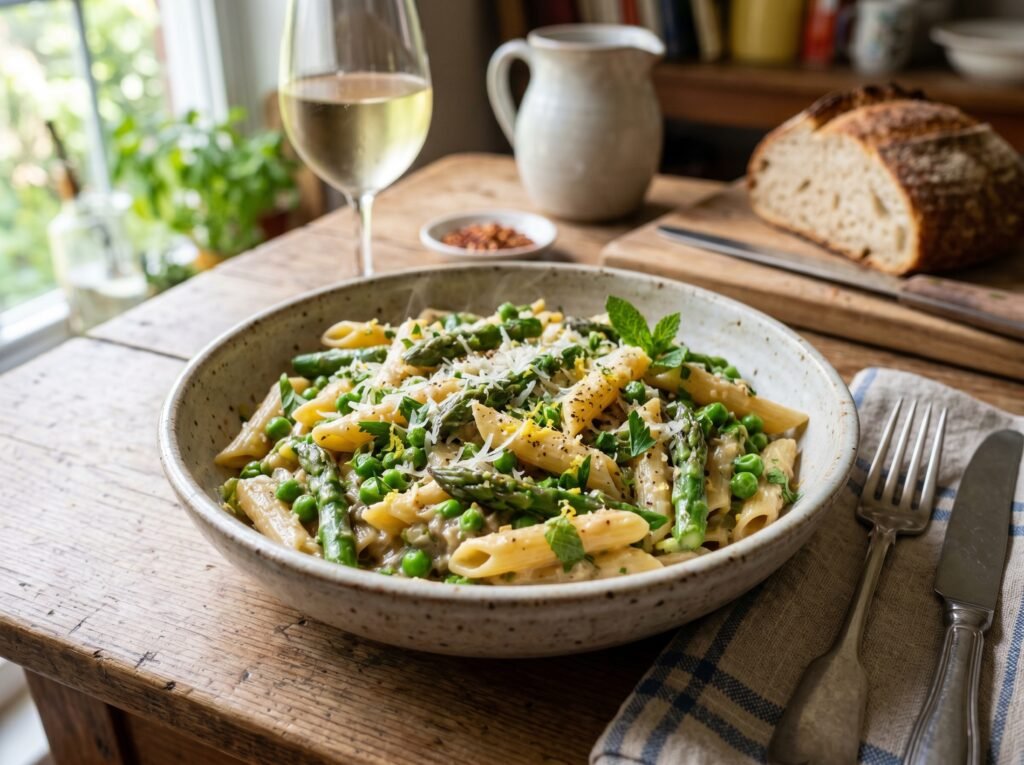
When looking for a pasta dish that perfectly captures the fresh, rejuvenating energy of spring, nothing compares to a masterfully executed Asparagus and Pea Pasta. Far from a heavy, cloying bowl swamped in heavy cream or a dry, unintegrated pile of noodles and oily vegetables, an elite spring pasta is a study in bright acidity, delicate sweetness, and light emulsification. It features tender, snappy asparagus spears and sweet garden peas tossed with a silky, velvety pan sauce built simply from starchy pasta water, crisp white wine, fresh lemon zest, and a touch of premium goat cheese or Parmigiano-Reggiano. If your homemade vegetable pastas consistently turn out dry and oily, separate into a watery pool at the bottom of the dish, or feature overcooked, mushy vegetables that have lost their vibrant color, it all comes down to starch-lipid emulsification and vegetable blanch timing.
The culinary science secret behind a glossy, restaurant-quality pasta sauce without using a heavy glug of cream is the Starch-Water Gelatinization and Flash Timing Strategy. When pasta cooks, it releases amylose and amylopectin (starches) into the boiling water. This starchy water acts as a powerful, natural binding agent. By combining a splash of this cloudy water with hot olive oil and cheese in a swirling pan, you force the fat and water to form a smooth, velvety emulsion that clings perfectly to every noodle. Concurrently, delicate spring vegetables like asparagus and sweet peas contain volatile organic compounds that degrade and turn a dull, unappetizing army-green if exposed to heat for too long. Adding them to the boiling pasta water for just the final 90 seconds of cooking cooks them to a perfect, snappy al dente while locking in their brilliant, emerald-green chlorophyll color.
Why You’ll Love This Spring Bowl
- A Luxurious, Cream-Free Sauce: Utilizing starchy cooking water creates a beautifully glossy, light sauce that coats the pasta without weighing it down.
- Shatteringly Fresh, Snappy Textures: The quick flash-boil method ensures the asparagus tips stay tender-crisp while the peas retain their sweet, juicy pop.
- An Electrifying Flavor Profile: Bright lemon zest and herbaceous fresh mint pierce through the rich cheese, instantly resetting your palate with every forkful.
- Fast and Effortless Weeknight Feasting: Because the vegetables cook directly in the same pot as the pasta, you save valuable time and cut down on clean-up.
Key Ingredients Overview
- Fresh Asparagus Spears: The undisputed crown jewel of spring produce. Snapping off the woody, fibrous bottom ends and slicing the stalks on a bias (at an angle) ensures they cook evenly and present beautifully.
- Sweet Garden Peas: Provide a delightful bursts of natural sugary sweetness that balances the savory notes of the cheese and garlic. You can use fresh shell peas or high-quality frozen sweet peas.
- Long Pasta (like Linguine or Spaghetti): The ideal canvas. The flat, wide surface area of linguine provides the perfect structural architecture for a light, glossy olive oil and lemon sauce to cling to.
- Tangy Goat Cheese or Creamy Ricotta: Adds a whisper of creamy richness and a beautiful, soft tang that pairs flawlessly with spring greens.
Step-by-Step Instructions
1.The Structural Snap and Bias Cut Prep:5 min.
Bring a large pot of heavily salted water to a rolling boil. While it heats, prep your asparagus. Take a spear and bend it near the bottom; it will naturally snap where the woody, fibrous section ends. Discard the tough bottoms. Slice the tender green stalks at a sharp 45-degree angle into 1-inch pieces, keeping the delicate tips whole.
2.The Starch-Releasing Al Dente Noodle Boil:8 min.
Drop your linguine or spaghetti into the roaring, salted water. Cook the pasta according to the package directions, but aim for roughly 2 minutes under the recommended cooking time for true al dente. The pasta will finish cooking directly in the sauce later, absorbing flavor as it expands.
3.The 90-Second Chlorophyll Flash Blanch:2 min.
For the final 90 seconds of the pasta’s cooking time, dump your sliced asparagus pieces and sweet peas straight into the boiling pot with the noodles. This fast flash-boil par-cooks the vegetables, preserving their vibrant, emerald-green color and locking in their juicy, snappy texture.
4.The Liquid Gold Starch Reserve Law:1 min.
Stop! Before you tip the pot into a colander, submerge a heatproof measuring cup and scoop out 1 full cup of the cloudy, starchy pasta cooking water. Set it aside safely. This liquid contains the essential gelatinized starches needed to emulsify your sauce; discarding it will leave your pasta dry and separated. Drain the pasta and veggies together.
5.The Searing Allium and White Wine Deglaze:4 min.
Wipe your empty pasta pot dry (or grab a large skillet) and place it over medium heat. Add 2 tablespoons of extra virgin olive oil. Sauté your minced garlic and a pinch of red pepper flakes for 60 seconds until highly aromatic. Pour in the dry white wine, letting it bubble and reduce by half to cook off the raw alcohol flavor.
6.The Swirling Starch-Water Lipid Emulsion:3 min.
Drop the drained pasta and green vegetables back into the pot with the hot garlic oil and wine. Pour in 1/2 cup of your reserved starchy pasta water. Add your crumbled goat cheese (or grated parmesan), fresh lemon juice, and lemon zest. Turn the heat to medium-high and toss or stir vigorously for 2 minutes.
7.The Aromatic Mint Polish Presentation:1 min.
As you toss, the starch water, cheese, and olive oil will merge into a silky, cohesive, glossy green sauce that perfectly coats every noodle. If it looks too dry, splash in a little more pasta water. Turn off the heat and stir in your finely sliced fresh mint and parsley leaves. Divide into warm bowls, top with an extra crack of black pepper, and serve immediately!
Expert Tips for Success
- The Golden Pasta Water Rule: Never skip saving your pasta water. Standard tap water will not work to build this sauce; it lacks the concentrated, loose starches that have scrubbed off the noodles during the boil. Without this starchy binder, your olive oil and lemon juice will simply pool at the bottom of your bowl in a greasy layer, leaving the pasta on top dry and unseasoned.
- The Snapping Asparagus Trick: Don’t bother cutting off the ends of asparagus with a knife. Hold the very bottom of a spear in one hand and the middle of the stalk in the other, then bend it gently until it breaks. The spear will naturally snap at the precise boundary where the tough, woody, stringy cells end and the tender, juicy cells begin, saving you from a woody bite.
- Add Herbs at the Absolute End: Always stir your fresh mint and parsley into the pasta at the very last second, right after you turn off the heat. Delicate leafy herbs contain highly volatile aromatic oils that dissipate instantly under high heat. Adding them too early cooks out their refreshing flavor and turns the beautiful green leaves a dark, oxidized black color.
The Recipe Card
- Prep Time: 15 mins
- Cook Time: 15 mins
- Total Time: 30 mins
- Yield: 4 Vibrant, Herbaceous Bowls (4 Satisfying Servings)
Ingredients:
- The Spring Green Core & Pasta: 340g (12 oz) High-Quality Linguine or Spaghetti, 1 Large Bunch (approx. 450g / 1 lb) Fresh Asparagus (woody ends snapped, cut into 1-inch bias pieces), 150g (1 cup) Sweet Garden Peas (fresh or frozen).
- The Zesty Pan Emulsion: 2 tbsp Premium Extra Virgin Olive Oil, 3 Cloves Garlic (minced), A pinch of Crushed Red Pepper Flakes, 60ml (¼ cup) Dry White Wine (like Pinot Grigio or Sauvignon Blanc), Juice and Zest of 1 Large Organic Lemon, 100g (3.5 oz) Soft, Creamy Goat Cheese or Fresh Ricotta, ½ tsp Fine Sea Salt, ¼ tsp Freshly Ground Black Pepper.
- The Fresh Herb Finish: 15g (¼ cup) Fresh Mint Leaves (finely sliced into thin ribbons), 15g (¼ cup) Fresh Flat-Leaf Italian Parsley (coarsely chopped).
Instructions:
Bring a large pot of heavily salted water to a rolling boil and drop in the pasta, cooking for about 2 minutes less than the package instructions for al dente. For the final 90 seconds of the pasta’s cooking time, add the sliced asparagus and peas directly into the boiling water with the noodles. Just before draining, carefully scoop out and reserve 1 cup of the starchy cooking water. Drain the pasta and veggies. In the empty pot, heat 2 tbsp of olive oil over medium heat and sauté the minced garlic and red pepper flakes for 1 minute until fragrant; pour in the white wine and let it simmer and reduce by half. Return the drained pasta and vegetables to the pot. Add ½ cup of the reserved pasta water, the lemon juice, lemon zest, crumbled goat cheese, salt, and black pepper. Turn the heat to medium-high and toss vigorously for 2 minutes until the cheese melts and fuses with the starch water into a smooth, glossy sauce. Stir in the fresh mint and parsley, adjust with more pasta water if too thick, and serve immediately.
